 Fluency Fuel Donate
Research
THE SCIENCE BEHINDFLUENCY FUEL
At Fluency Fuel, our mission is rooted in decades of literacy research. We believe every child can become a confident reader when provided with evidence-based instruction, early intervention, and meaningful opportunities to practice reading.
Research consistently shows that reading proficiency is one of the strongest predictors of future academic success. Children who struggle with reading in the early elementary years are more likely to experience ongoing academic challenges, making early identification and intervention critical.
Our programs are designed around scientifically supported practices that help students build strong reading foundations while developing confidence and a love of literacy.
What the Research Says
KEY FINDINGS
Reading Fluency Matters
Fluent readers focus on comprehension rather than decoding individual words, leading to stronger vocabulary and academic achievement.
Early Intervention Changes Lives
Students who receive targeted instruction in the primary grades make significantly greater gains than those helped later.
Structured Literacy Works
An explicit, systematic approach to teaching reading recommended for all students and especially effective for dyslexia.
Supporting Dyslexia
With explicit instruction, multisensory methods, and early intervention, students with dyslexia can become successful readers.
Framework
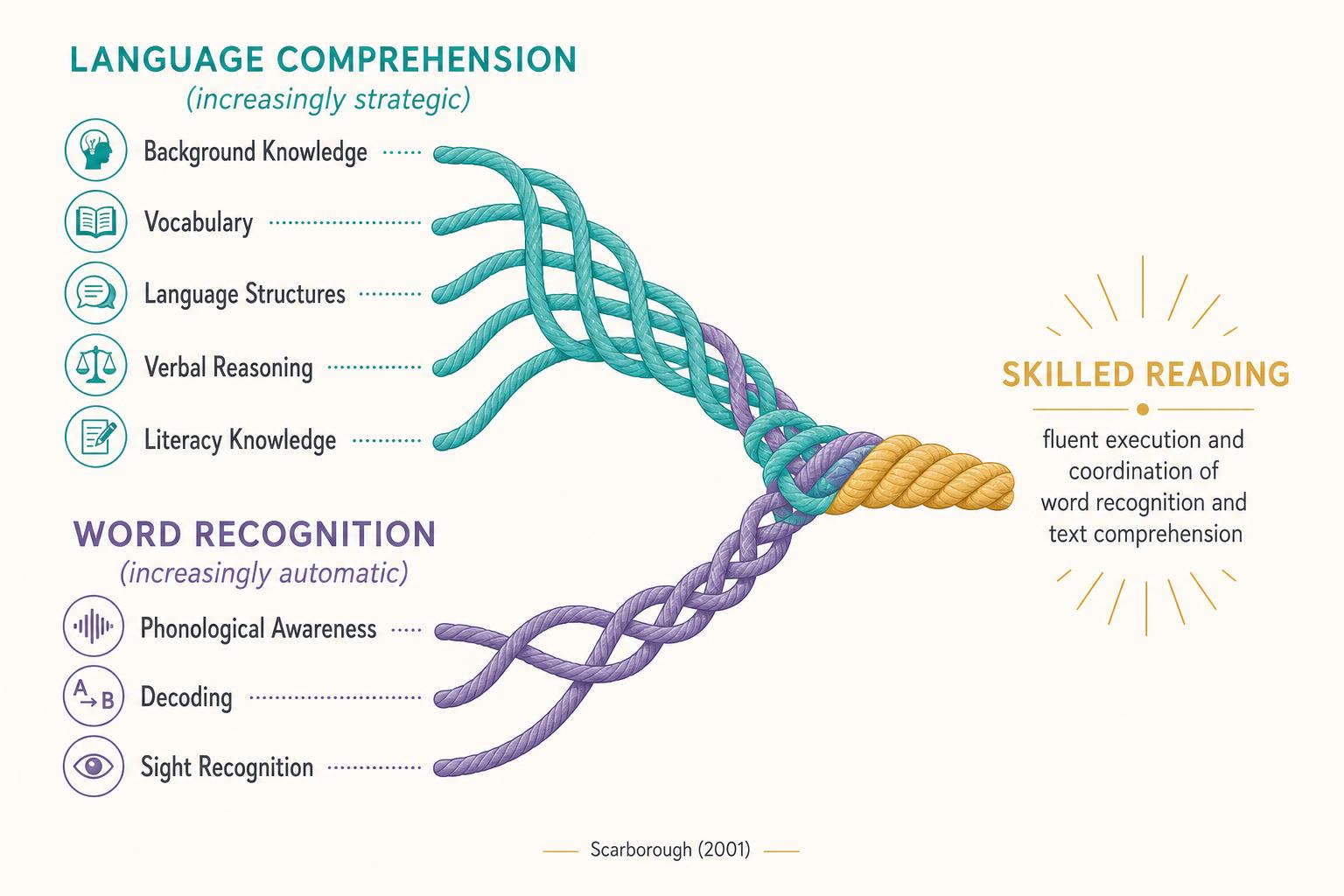
SCARBOROUGH'S READING ROPE
Dr. Hollis Scarborough's model shows how many strands weave together into skilled reading — language comprehension growing more strategic, word recognition growing more automatic.
DID YOU KNOW?
Key literacy statistics that underscore why evidence-based reading instruction matters.
1 in 5
students has dyslexia — the most common learning difference.
64%
of 4th graders read below grade level nationwide.
90%+
of reading gaps can be closed with early intervention in K–2.
4x
more likely to drop out if still struggling after 3rd grade.
READING FLUENCY MATTERS
Reading fluency is the ability to read accurately, at an appropriate pace, and with expression. Fluent readers are better able to focus on understanding what they read rather than decoding individual words.
Research has found that fluent readers demonstrate stronger:
- Reading comprehension
- Vocabulary development
- Academic achievement
- Overall confidence as readers
EARLY INTERVENTION CHANGES LIVES
The earlier reading difficulties are identified, the greater the likelihood of successful intervention. Students who receive targeted instruction in the primary grades make significantly greater gains than those who receive intervention later in their educational journey.
STRUCTURED LITERACY WORKS
Fluency Fuel supports instructional practices aligned with Structured Literacy, an explicit and systematic approach to teaching reading. This approach is recommended for all students and is especially effective for students with dyslexia.
Structured Literacy Includes
- Phonemic awareness
- Phonics
- Vocabulary
- Reading fluency
- Reading comprehension
- Written language
SUPPORTING STUDENTS WITH DYSLEXIA
Dyslexia affects approximately 15–20% of the population and is one of the most common learning differences. Research shows that students with dyslexia benefit from:
- Explicit instruction
- Multisensory teaching methods
- Frequent practice
- Immediate feedback
- Early intervention
With appropriate support, students with dyslexia can become successful readers.
OUR COMMITMENT
At Fluency Fuel, we are committed to using research to guide every resource we create, every program we implement, and every family we serve.
We align our work with recommendations from leading organizations, including:
- International Dyslexia Association (IDA)
- The Reading League
- National Center on Improving Literacy (NCIL)
- Institute of Education Sciences (IES)
- What Works Clearinghouse
- National Institute of Child Health and Human Development (NICHD)
References
SOURCES
Key Research Articles
Download Resources (PDF)- Teaching Reading Is Rocket Science (Louisa Moats, 2020)
- National Reading Panel Report (NICHD)
- The Simple View of Reading (Reading Rockets)
- Scarborough's Reading Rope (Reading Rockets)
- Science of Reading Summaries (The Reading League Journal)
Leading Organizations
FUEL READERS WITH SCIENCE.
Help us put evidence-based literacy resources into the hands of every child.
Donate Now